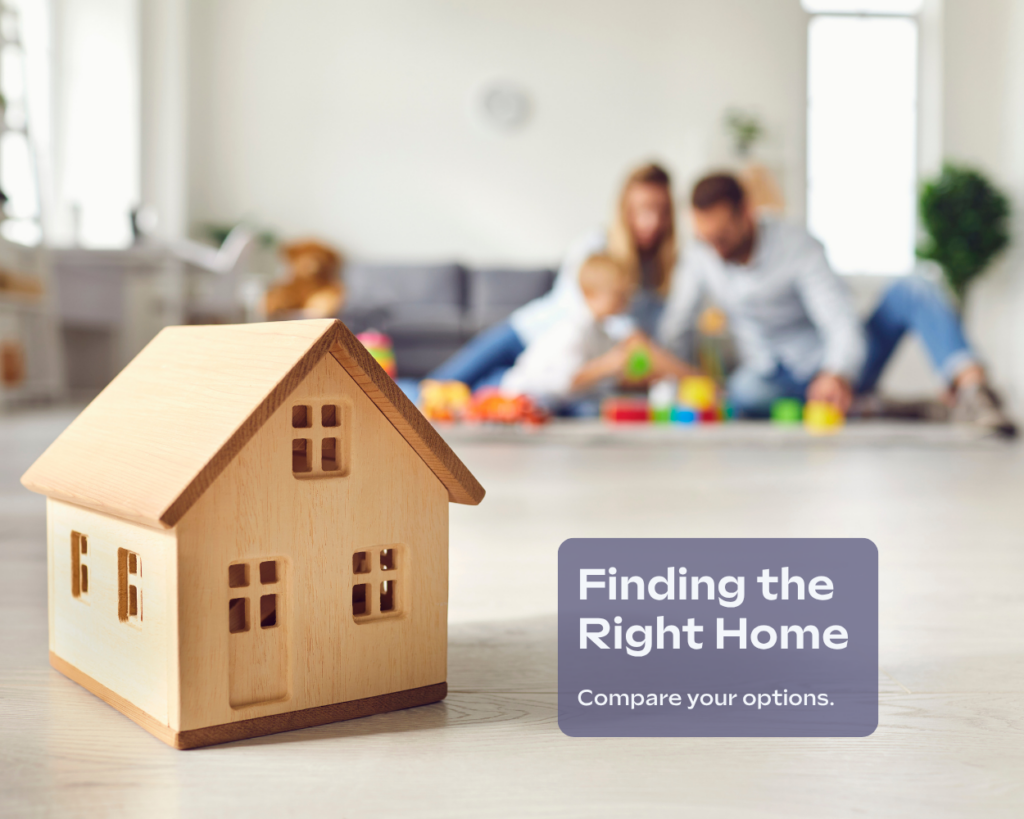
With so many options available, it’s important to carefully consider your needs and financial situation in order to make the best choice.
Before you start house hunting, speak to one of our mortgage loan officers about getting prequalified for a mortgage. This will help you know how much house you can afford.
Home Sweet Home: A Guide to Choosing the Right Type of House
Learn about different types of homes and discover which option may be the best fit for your lifestyle and budget.
Are you thinking about buying your first home? With so many options available, it’s important to carefully consider your needs and financial situation in order to make the best choice. Whether you’re looking for a single-family home, a townhouse, or a condo – or even a green home – we’ll give you the information you need to make a confident and informed decision. We’ll also look at the pros and cons of buying, building, and fixing up a house.
3 Types of Housing
Do you enjoy doing yardwork or prefer the ease of condo life? Maybe you’re looking for a fixer-upper? Comparing different types of home can help first-time buyers narrow down their options. Here are six popular types of homes to consider.
Single-Family Houses
These one-unit structures have open space on all four sides and are not attached to any other building. Single-family houses come in many different styles and sizes, giving you more options when searching for the house that suits you best.
Single-family houses typically come with more living and outdoor space, allowing you to spread out and enjoy more privacy. What’s more, you will have more control over the property, so you can make almost any changes or renovations you see fit. Because they have the potential to appreciate in value, these types of houses are a good investment.
While detached houses tend to offer the highest level of independence in terms of enhancing the buildings or the property that comes with them, these houses may not provide you with access to many of the features and facilities commonly found in condo and townhouse communities. In addition, prices of detached houses vary widely depending on size and location.
Condominiums
Developers often build condos as attached living spaces within a larger building or community. They may offer amenities like a pool and gym. Condo and homeowners’ association (COA and HOA) create community rules and collect monthly assessment fees from owners. When living in a condo, owners must pay monthly condo assessment fees, which are in addition to the monthly mortgage payment and which may be higher than those for townhouses.
Condominiums offer a low-maintenance approach to homeownership and resemble rental apartments in appearance. condos typically cost less than townhouses or detached homes because buyers do not purchase the surrounding land.
Townhouses
A townhouse is typically two stories tall and connected to similar houses in a row. It may also come with an attached garage and a yard. When you purchase a townhouse, you not only own the dwelling itself but also the land it stands on. It’s important to note that the responsibility for maintaining the exterior of the townhouse falls on the homeowner. Townhouses work well for homeowners who want more responsibility for their property without maintaining a large yard.
Townhouses offer more living space than a condo, but less space and privacy than a single-family house. Like condos, townhouses are generally more affordable than detached houses and can be a good choice for first-time buyers.
3 Homebuying Strategies
If you’re a first-time buyer looking to purchase a home, it’s essential to determine the kind of property that best meets your needs. Let’s look at some advantages and disadvantages of buying a move-in-ready house, constructing a new home, or renovating a fixer-upper.
Buy a Move-In-Ready House
Buyers can move into a move-in-ready home immediately without completing major repairs or renovations. The main advantage of this type of home is convenience, as you can move in quickly and easily without having to deal with the hassle and stress of living in a construction zone. Buyers also know the home’s condition upfront, which helps reduce unexpected expenses.
However, move-in ready houses are generally more expensive than fixer-uppers and may not offer as much customization. There may also be less potential for return on investment because the home is already in good condition.
Build a Custom House
Building a custom house gives homeowners full control over their home’s design and features. The main advantage of this type of house is personalization, as you have full control over the design and layout of the home. Additionally, you can incorporate energy-efficient features and appliances, and no major repairs or renovations should be required for many years.
On the downside, building a custom house can be more expensive than buying an existing home, and the construction process can take longer and may be subject to delays due to various factors.
Fix Up an Existing House
Renovating a fixer-upper gives homeowners a more affordable way to personalize a home and increase its value. Lower purchase prices often make fixer-uppers more affordable than move-in-ready homes or new construction. Additionally, renovating a house allows for customization to your exact preferences and can provide a potential return on investment.
However, renovation projects can uncover unexpected costs, including structural, plumbing, or electrical issues. major renovation projects can also be time-consuming and stressful, particularly if major renovations are required and you have to live under construction.
Green Homes
Builders design green homes with sustainability and energy efficiency in mind. They aim to minimize their impact on the environment through the efficient use of resources, such as energy, water, and materials.
According to the U.S. Green Building Council (USGBC), builders use recycled and renewable materials to construct green homes. Many environmentally friendly homes reduce water and energy use through solar panels and other sustainable features.
Many builders also include well-insulated windows and doors, and the paints and carpets used are all made without VOCs, volatile organic compounds. In addition, green households come with Energy Star-qualified lighting and appliances, and showerheads and toilets that use less water that ultimately save you more money. To ensure that the home you are purchasing meets sustainable construction standards, look for the USGBC’s LEED certification in a green home.
There are lots of benefits to owning a green home: Lower energy and utility costs, improved indoor air quality, reduced environmental impact, and increased home value and market appeal. However, green homes often cost more upfront, and some areas offer fewer housing options to choose from.
Conclusion
Choosing between different types of homes comes down to your lifestyle, budget, and long-term goals. Whether you prefer a move-in-ready house, a custom build, or a fixer-upper, understanding your options can help you make a confident decision. Taking time to compare the pros and cons of different types of homes will help you find the right fit for your future.
Continue Your Journey
Ready to take the next step toward homeownership? Speak with one of our mortgage loan officers to learn more about choosing the right house – and the right loan.